Online Individual Therapy & Counselling UK | Relational Resonance

Online Individual Therapy

Online Individual Therapy Across the UK

Always connected. Sometimes hard to hear yourself.

Online individual therapy gives you a regular space to slow things down and think about what is happening for you. You may be feeling anxious, low, stuck or overwhelmed, or trying to make sense of relationships, identity or experiences that keep returning.

I work online with adults across the UK. You may also see this kind of support described as online counselling or talking therapy.

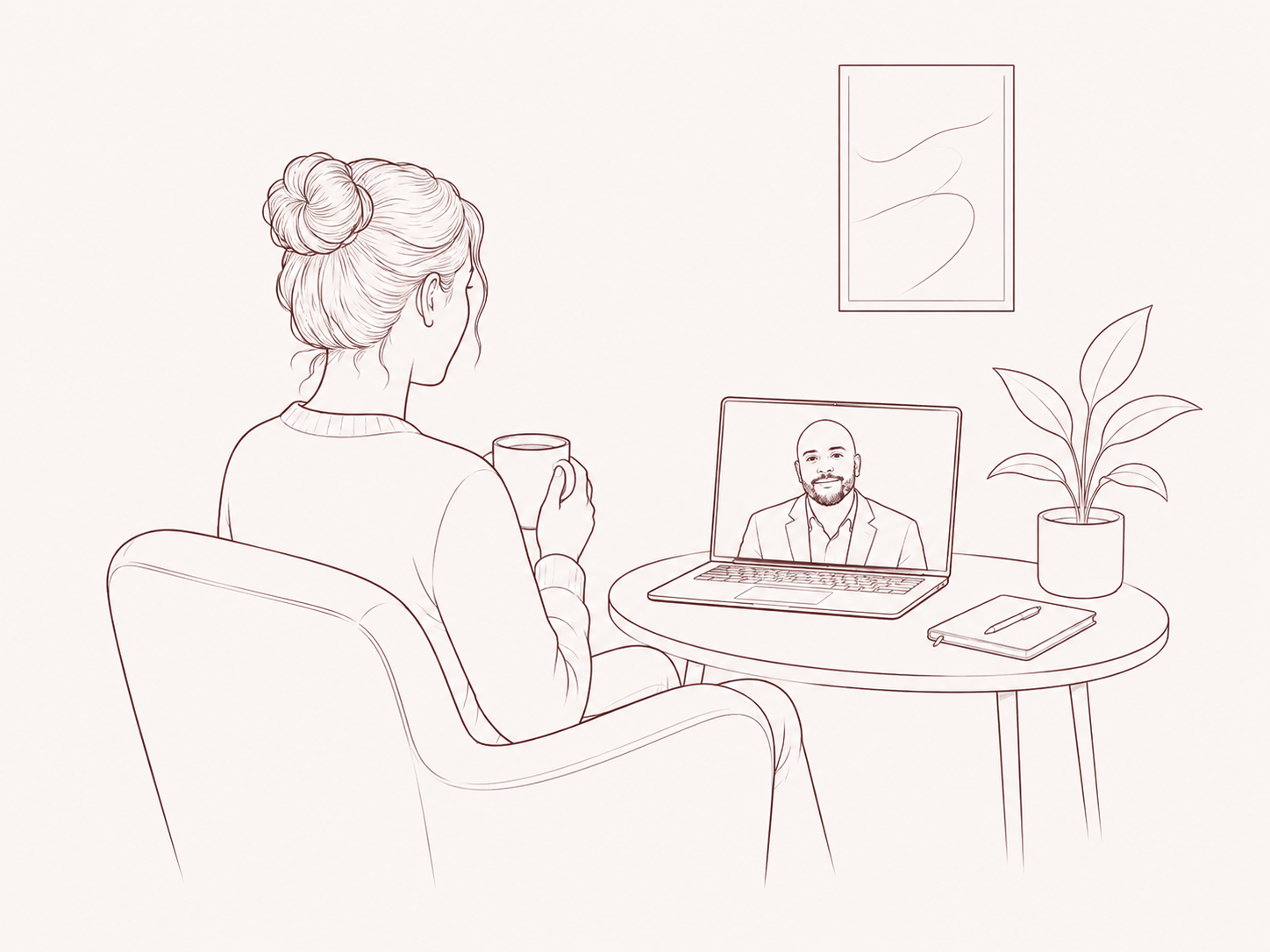
Illustration of an individual attending online therapy with Adam Lawrence-Rodriguez

What may have brought you here

When something keeps returning

You do not need a diagnosis or a perfectly clear reason for starting. Sometimes you simply know that the way you are feeling, coping or relating has become harder to carry alone.

Anxiety and overthinking

Your mind may feel difficult to quiet, with worry, pressure or self-criticism taking up more space than you would like.

Low mood and feeling unlike yourself

You may still be functioning outwardly while privately feeling flat, hopeless, disconnected or unsure where your energy has gone.

Relationships and repeating patterns

A relationship, breakup, dating experience or family difficulty may leave you wondering why the same feelings around closeness, trust or conflict keep returning.

Identity, loss and change

Race, culture, belonging, grief, trauma, parenthood or another transition may have unsettled how you understand yourself and your place in the world.

Online talking therapy

Different words for somewhere to think

Talking therapy is a broad term for psychological support that happens mainly through conversation. You may have searched for online therapy, counselling, psychotherapy or talking therapy. I use the word therapy because it best describes my relational and psychodynamic way of working.

Whatever term brought you here, the important question is whether the space feels useful enough for you to speak openly about what is happening in your life and relationships.

How I work

Relational and psychodynamic therapy

I work relationally and psychodynamically. That means being interested not only in what is difficult now, but in the relationships, experiences and ways of protecting yourself that may have shaped how you respond to closeness, conflict, loss or uncertainty.

We may notice patterns you already recognise intellectually but still find yourself repeating. Therapy gives us somewhere to become curious about those patterns as they appear, rather than expecting you simply to think your way out of them.

Relationships can be part of individual therapy too

You may be trying to understand a current relationship, a breakup, dating, family relationships, loneliness, trust or why the same feelings around closeness and conflict keep returning. You do not need the other person to attend for those experiences to have a place in therapy.

Online and in person

How does individual therapy online differ from in person?

The work can be just as thoughtful in either setting. What changes is how you arrive, what surrounds you and what happens when the session ends.

There is no journey to the session, which can make therapy easier to fit around work or family life. It can help to leave yourself a few quiet minutes before the call so you are not moving straight from one task into another.

Arriving

The journey to a therapy room can create a transition out of everyday life. Even a short journey can give you time to notice what is on your mind before you sit down.
Privacy needs some thought. If you live with other people or children are at home, choose a time and place where you can speak without being overheard. Headphones help you listen privately, but they do not stop your side of the conversation being heard.

Privacy

Leaving home or work creates a clearer boundary around the session. Once you arrive, there is usually less competition from the practical life happening around you.

Some people find it easier to speak from somewhere familiar or with a little physical distance. Others notice that a screen can make it easier to stay in their head or feel more self-conscious. These are things we can notice together.

Presence

Sharing a room can make silence, emotion and another person's presence feel more immediate. That can feel containing for some people and more exposing for others.

When the call ends, you are immediately back in your own space. There is no journey home to reflect or let the intensity settle, so it can help to leave a little time before moving on to the next part of your day.

After the session

The journey away can create a natural transition. You may use it to think, walk or simply have some quiet before returning to ordinary life.

Before you begin

Questions you might be asking

Some practical questions matter when you are deciding whether meeting online feels right for you.

Illustration about digital life, attention and emotional wellbeing

Life Online

Your online life does not stay on the screen.

Messages, social media, dating apps, work notifications and the constant availability of other people's lives can all shape how we feel about ourselves. Sometimes the difficulty is obvious. Sometimes it appears as comparison, anxiety, distraction, loneliness or the sense that your attention is never quite your own.

The Reading Room is where I think about some of these experiences in more depth.

Explore the Reading Room →

From the Reading Room

A quieter place for longer pieces on emotional life, relationships and the things that keep returning.

Ready to take the next step?

Arrange an initial consultation for online individual therapy or counselling across the UK.

Request an Appointment